
Your brain ages differently from the rest of your body, and the process starts earlier than most people realize. By your mid-twenties, neural processing speed begins to slow, and by 60, the hippocampus shrinks at roughly 1-2% per year, affecting memory formation and recall. But here’s what matters: emerging research suggests cannabis compounds, particularly CBD and specific ratios of THC, may influence how your brain ages, though the evidence remains complicated and sometimes contradictory.
The question isn’t whether cannabis is a miracle cure or a cognitive threat. The reality sits somewhere in between, shaped by factors like dosage, cannabinoid ratios, your age when you start using it, and your individual biology. Some studies show promise for neurodegenerative conditions like Alzheimer’s and Parkinson’s, where inflammation plays a central role. Others raise concerns about long-term heavy use, particularly in younger adults whose brains are still developing.
For older adults exploring cannabis as a wellness tool in 2026, the landscape has changed dramatically. We have better products, more precise delivery methods, and growing (though still insufficient) clinical data. What we don’t have are definitive answers that apply universally to everyone over 50. The brain’s endocannabinoid system does play a role in neuroplasticity, inflammation control, and even the clearance of amyloid plaques, but translating laboratory findings into practical guidance requires nuance.
This article breaks down the science of brain aging, examines what current research actually tells us about cannabis and cognitive health, identifies where the evidence shows real promise versus hype, and offers practical considerations for older adults weighing the decision to use cannabis. We’ve also spoken with researchers, clinicians, and older cannabis users to understand how theory meets real-world experience.
What Actually Happens to Your Brain as You Age
Your brain doesn’t just age, it transforms in ways that affect how you think, remember, and feel. Understanding these changes is the first step toward appreciating why researchers are investigating cannabis as a potential protective agent.
Starting in your mid-twenties, your brain begins a slow, natural decline. Brain volume shrinks by about 5% per decade after age 40, with the prefrontal cortex and hippocampus, areas crucial for decision-making and memory, showing the most significant changes. This isn’t catastrophic, but it’s measurable and real.
One of the most consequential shifts is chronic low-grade inflammation, often called neuroinflammation. Your brain’s immune cells, microglia, become increasingly overactive with age. Instead of just cleaning up cellular debris and fighting infections, they start releasing inflammatory molecules that damage healthy neurons. This persistent inflammation creates a toxic environment that accelerates cognitive decline and raises your risk for neurodegenerative diseases.
Neuroplasticity, your brain’s ability to form new connections and adapt, also diminishes. Young brains create and reorganize neural pathways effortlessly. Aging brains lose this flexibility, making it harder to learn new skills, adapt to change, or recover from injury. The branching networks between neurons become less dense, and communication between brain cells slows.
Your brain’s cleanup systems struggle too. A waste-clearing process called the glymphatic system, which flushes out toxic proteins while you sleep, becomes less efficient. Proteins like beta-amyloid and tau start accumulating, forming the plaques and tangles associated with Alzheimer’s disease. Even in healthy aging, some buildup occurs.
Blood flow to the brain decreases, delivering less oxygen and fewer nutrients to hungry neurons. Mitochondria, the energy generators inside cells, produce less fuel and more oxidative stress, a cellular damage process that further harms neurons.
These changes don’t affect everyone equally or at the same pace. Genetics, lifestyle, diet, exercise, and social engagement all play roles. But the underlying biology is universal: aging brains face inflammation, reduced plasticity, waste accumulation, and energy deficits.
This is precisely why cannabis research matters. If compounds in cannabis can address even some of these mechanisms, reducing inflammation, protecting neurons, or supporting brain resilience, the implications for healthy aging could be profound. The question isn’t whether your brain ages. It’s whether we can slow the decline.

The Endocannabinoid System: Your Brain’s Built-In Maintenance Crew
Your body produces its own cannabis-like compounds. Surprised? Most people are. The endocannabinoid system operates in virtually every tissue and organ, but its role in your brain is particularly crucial as you age.
Think of this system as your brain’s quality control department. It regulates everything from mood and memory to inflammation and pain perception. At its heart are two main types of receptors: CB1 and CB2. CB1 receptors concentrate heavily in your brain and central nervous system, while CB2 receptors show up primarily in immune cells and peripheral tissues.
Your body manufactures natural endocannabinoids, mainly anandamide and 2-AG, that bind to these receptors. When everything works properly, this system maintains balance. Anandamide, sometimes called the “bliss molecule,” influences mood, appetite, and memory formation. 2-AG plays a bigger role in immune function and managing inflammation.
Here’s the problem: this maintenance crew doesn’t work as efficiently when you’re 70 as it did when you were 30. Research shows significant endocannabinoid changes with age including reduced receptor density, lower production of natural endocannabinoids, and altered signaling pathways. CB1 receptors decline in number and sensitivity. Your brain produces less anandamide. The whole system essentially loses steam.
This decline matters because your aging brain faces mounting challenges: increased oxidative stress, chronic low-grade inflammation, reduced neuroplasticity. The endocannabinoid system normally helps manage these threats. When it can’t keep up, cognitive function suffers.
CB2 receptors become particularly important in older brains. These receptors ramp up in response to brain injury or inflammation, attempting to protect neurons from damage. They regulate microglial cells, your brain’s immune defenders, which can become overactive with age and contribute to neurodegeneration rather than preventing it.
The endocannabinoid system also influences neurogenesis, the creation of new brain cells, especially in the hippocampus, your memory center. Even in older brains, some neurogenesis continues, and endocannabinoid signaling helps regulate this process. When the system weakens, so does your brain’s ability to generate fresh neurons and form new connections.
Understanding this built-in system explains why plant cannabinoids might offer benefits for aging brains. They can potentially supplement or enhance a system that evolution designed to protect your brain but that time has worn down.
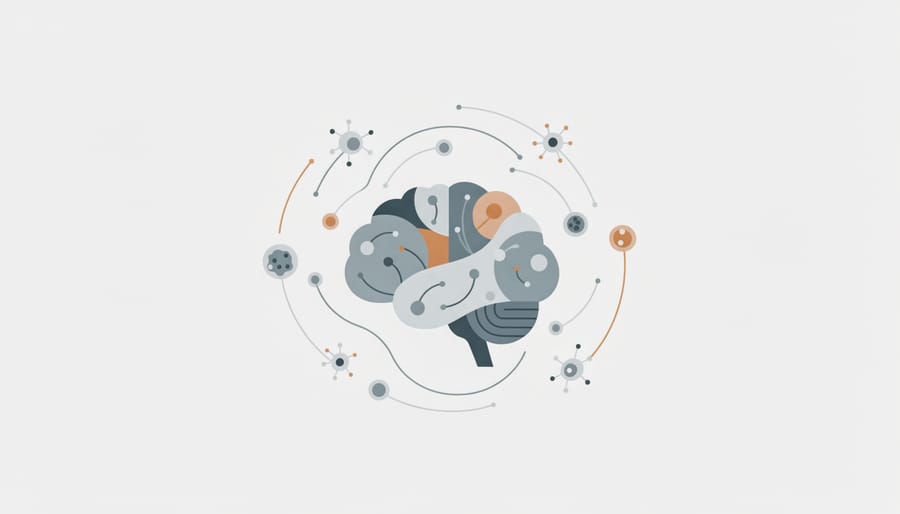
What Research Actually Shows About Cannabis and the Aging Brain
The Low-Dose Paradox
Here’s one thing that throws most people: the dose of THC that helps a 70-year-old’s brain might be exactly what you’d want to avoid at 25. Low-dose THC, we’re talking microdoses around 1-3 milligrams, appears to restore function in aging brains while higher doses impair cognition in younger adults.
Studies in older mice given tiny amounts of THC showed improved memory and learning compared to untreated aged mice, performing nearly as well as young mice. But young mice given the same dose actually performed worse. The theory centers on that declining endocannabinoid system we discussed earlier. Aging brains have fewer cannabinoid receptors and produce less of their own endocannabinoids, so a small external boost from THC may compensate for what’s missing, bringing the system back toward balance. Younger brains, already running at full capacity, get overstimulated by the same dose.
This isn’t a green light to self-medicate with random THC products. The effective range is narrow, individual responses vary wildly based on genetics and prior cannabis exposure, and we don’t yet have precise human dosing guidelines. But it does explain why some older adults report mental clarity from amounts that would barely register for recreational users, and why conversations about cannabis and the brain need to account for age as a crucial variable.

CBD’s Role in Brain Health
While THC gets most of the attention in brain aging research, CBD has carved out its own reputation as a neuroprotector. Unlike THC, CBD doesn’t bind strongly to brain receptors. Instead, it works through multiple pathways simultaneously, reducing inflammation, boosting antioxidant activity, and promoting the survival of brain cells under stress.
Studies from 2024 and 2025 have shown CBD reduces neuroinflammation by interacting with immune cells in the brain, potentially slowing the progression of neurodegenerative diseases. It also appears to protect neurons from oxidative damage, which accumulates as we age and contributes to cognitive decline.
What makes CBD particularly appealing for older adults is its lack of intoxication. You can take it daily without getting high, making it easier to incorporate into a wellness routine alongside other medications. Research suggests doses between 15-50mg may offer cognitive benefits, though individual responses vary widely.
The catch? Most CBD studies use isolated, pharmaceutical-grade cannabidiol at precise doses. The CBD products in dispensaries or online may not deliver the same effects, especially at lower concentrations or when mixed with other compounds.
Conditions Where Cannabis Shows Promise for Brain Aging
Let’s look at where the science is pointing us. While researchers stress that we’re not talking about cures, the evidence for cannabis helping specific age-related brain conditions is growing stronger each year.
Alzheimer’s disease has attracted the most attention. Studies on both THC and CBD show they can reduce the buildup of amyloid-beta plaques, those protein tangles that clog Alzheimer’s brains. A 2019 study from the Salk Institute found that THC reduced inflammation and protected neurons from plaque damage in lab models. More compelling are the Israeli trials that gave small doses of THC-rich cannabis to Alzheimer’s patients, reporting reduced agitation, better sleep, and less caregiver stress. The compounds appear to work by calming the brain’s inflammatory response while supporting the cleanup of damaged cells.
Parkinson’s disease research focuses heavily on motor symptoms, but the brain protection aspect matters too. CBD has shown promise for reducing inflammation in the substantia nigra, the brain region that degrades in Parkinson’s. Brazilian researchers documented improved quality of life and sleep in Parkinson’s patients using CBD, while animal studies suggest it might slow the loss of dopamine-producing neurons. The antioxidant properties of cannabinoids could shield remaining brain cells from further damage.
| Condition | Compounds Studied | Research Status | Key Findings |
|---|---|---|---|
| Alzheimer’s Disease | THC, CBD | Human trials ongoing, animal studies robust | Reduces amyloid plaques, decreases neuroinflammation, improves behavioral symptoms |
| Parkinson’s Disease | CBD primarily, some THC | Small human trials, promising animal data | Neuroprotection in dopamine regions, reduced inflammation, improved sleep and quality of life |
| Age-Related Cognitive Decline | Low-dose THC, CBD | Early human trials, strong animal evidence | Reversal of age-related memory deficits in mice, improved neuroplasticity markers |
| Chronic Neuroinflammation | CBD, CBG, THC | Mechanism studies, early clinical data | Reduces microglial activation, lowers inflammatory cytokines, protects blood-brain barrier |
For general age-related cognitive decline, the slower thinking and occasional memory lapses many of us notice, the animal research is frankly remarkable. German scientists gave low-dose THC to old mice and saw their cognitive performance revert to levels matching young mice. Their brains showed increased neuron connections and improved gene expression patterns. Human trials are just beginning, but early data from older adults using cannabis suggests maintained or improved cognitive scores compared to non-users.
Chronic neuroinflammation ties everything together. It’s the common thread running through Alzheimer’s, Parkinson’s, and general brain aging. CBD especially excels at calming overactive microglia, the brain’s immune cells that, when stuck in overdrive, damage healthy tissue. By dialing down inflammation without completely shutting down immune function, cannabinoids might address a root cause rather than just symptoms.
The catch remains sample size and duration. Most human trials involve dozens of participants followed for months, not thousands tracked for years. What we have is encouraging, sometimes dramatically so, but it’s a foundation that needs building up.
What We Still Don’t Know (And Why That Matters)
The research landscape looks promising, but let’s be clear about what we’re missing. Most studies on cannabis and brain aging rely on animal models or small human trials. We don’t have the decade-long, thousands-of-participants studies that would give us definitive answers about how cannabis affects cognitive aging over time.
The dosing question remains maddeningly vague. While research suggests low doses of THC might benefit aging brains, “low” varies wildly depending on who you ask, anywhere from 1mg to 10mg daily. We don’t know the ideal ratio of THC to CBD for neuroprotection, or whether different terpene profiles matter for cognitive health. Every brain ages differently, yet we’re working with one-size-fits-all recommendations.
Long-term safety data barely exists. What happens after five years of daily cannabis use starting at age 65? What about twenty years? We can’t answer these questions because prohibition made them illegal to study until recently. The research we do have often comes from countries with more progressive cannabis policies, creating gaps in how findings translate to American products and use patterns.
Decades of prohibition didn’t just delay research, it created a hostile environment that discouraged scientists from pursuing cannabis studies altogether. Funding was scarce, regulatory hurdles were enormous, and career risks were real. We’re essentially playing catch-up on questions we should have been answering since the 1970s.
This uncertainty matters because older adults deserve evidence-based guidance, not guesswork. The gaps in our knowledge mean doctors often can’t confidently recommend cannabis, insurance won’t cover it, and users are left navigating complicated decisions without adequate support. The promising preliminary findings make continued research not just important but urgent. Every year we delay comprehensive studies is another year of potential benefits unrealized and risks unquantified.
Real Stories: Older Adults Using Cannabis for Cognitive Health
Margaret, 73, started using a low-dose CBD-THC tincture in 2024 after watching her mother’s decade-long decline from Alzheimer’s. “I wasn’t interested in getting high,” she explains. “I wanted my brain to work longer.” Within three months, she noticed sharper recall of names and less of the mental fog that had been creeping in. Her neurologist can’t definitively attribute the improvement to cannabis, but Margaret’s cognitive assessments have remained stable for eighteen months, a plateau she considers a win.
Robert, a 68-year-old retired engineer with early Parkinson’s symptoms, turned to cannabis primarily for tremor control. The cognitive benefits caught him off guard. “I’d been struggling to follow complex conversations, especially in groups,” he says. After finding the right THC:CBD ratio through careful experimentation, he reports feeling more mentally present. “It’s subtle, not miraculous. But I’m tracking stocks again, doing crosswords, engaging with my grandkids’ science projects.”
Not everyone experiences dramatic shifts. Linda, 81, tried various cannabis products for six months hoping to offset mild cognitive impairment. She found CBD helpful for sleep and anxiety but noticed no clear cognitive improvement. “I wanted it to be a magic bullet,” she admits. “It helped other things, which matters, but my memory issues haven’t changed much.” Her experience highlights an important reality: individual responses vary widely.
What unites these stories is thoughtful, low-dose approaches, typically starting with CBD-dominant products and adding minimal THC if needed. None of these individuals smoke cannabis; they prefer tinctures, capsules, or edibles for precise dosing. All consulted healthcare providers, though not all physicians were supportive initially.
These narratives illustrate what research suggests but can’t yet prove definitively: some older adults experience cognitive benefits from cannabis, while others notice improvements in related areas like sleep and mood that indirectly support brain health. The common thread isn’t guaranteed results but informed experimentation, realistic expectations, and close attention to how their own brains respond. Their experiences underscore why we need rigorous clinical trials, and why anecdotal reports, while not scientific proof, remain valuable signposts for future research.
Practical Considerations for Older Cannabis Users
If you’re considering cannabis for cognitive health, the most important principle is this: what works for a 25-year-old is not what works for a 75-year-old. Older bodies metabolize THC differently, liver function changes with age, and the risk of adverse interactions with prescription medications is real. Approaching cannabis mindfully means treating it like any other supplement or medication, with careful attention to dosing, delivery method, and your individual health context.
Start with the lowest effective dose and increase gradually over weeks, not days. For many older adults new to cannabis, this might mean as little as 2.5mg of THC or 10mg of CBD. The “start low and go slow” mantra isn’t just cautious advice; it’s based on evidence that lower doses often produce better outcomes for aging brains than the higher recreational doses popular among younger users. Keep a simple journal noting the dose, time, delivery method, and effects you experience over the following hours. This tracking helps you identify patterns and find your personal threshold without overshooting it.
Delivery method matters significantly for older adults. Smoking isn’t ideal if you have respiratory issues or cardiovascular concerns. Edibles offer smoke-free consumption but come with delayed onset (60-90 minutes) and longer duration, which can catch inexperienced users off guard. Tinctures and oils placed under the tongue provide faster onset than edibles with more control than smoking. Vaporizing flower or concentrates at lower temperatures reduces harmful byproducts compared to combustion while offering relatively quick effects. Many older adults find that CBD-dominant products or balanced THC:CBD ratios (like 1:1) provide benefits with fewer psychoactive effects than THC-heavy options.
Before trying cannabis, review these critical safety considerations:
- Start with doses of 2.5mg THC or less and wait at least two hours before considering more
- Check all your current medications for potential interactions, especially blood thinners, sedatives, and blood pressure medications
- Choose delivery methods appropriate for your health status, avoid smoking if you have lung or heart conditions
- Track your experiences in a journal to identify what works and what doesn’t
- Consult your doctor or a cannabis-knowledgeable healthcare provider before starting, particularly if you take multiple medications
The medication interaction point deserves emphasis. Cannabis can affect how your body processes certain drugs, potentially strengthening or weakening their effects. Blood thinners like warfarin, sedatives including benzodiazepines, and some blood pressure medications are particularly notable for interactions. A pharmacist familiar with cannabis can review your medication list and flag potential concerns, something that’s becoming easier as more healthcare professionals gain training in this area.
Don’t assume your regular doctor will bring up cannabis, even if it’s legal in your state. Many physicians received no training on the endocannabinoid system in medical school and may be hesitant to discuss it. If your current provider dismisses your questions outright, consider seeking a second opinion from a doctor who specializes in cannabis medicine or integrative health. You deserve medical guidance from someone who will take your interest seriously and help you weigh the potential benefits against your individual risk factors.
Finally, give any regimen adequate time before judging results. Brain health isn’t like pain relief, you won’t necessarily feel different immediately. Some older adults report noticing improved sleep quality within days, while cognitive benefits may take weeks to become apparent. Consistency matters more than intensity, and patience is essential when you’re supporting long-term neurological health rather than chasing an immediate high.
The relationship between cannabis and the aging brain isn’t what most people expect. While decades of “Just Say No” messaging painted cannabis as universally harmful to cognition, emerging research reveals a more nuanced reality: low-dose cannabis, particularly in older adults, may actually protect against some aspects of brain aging.
The science is promising but incomplete. Studies show potential benefits for neuroinflammation, neurodegenerative diseases, and age-related cognitive decline. Yet we’re still missing the large-scale, long-term human trials needed to make definitive claims. That gap exists largely because prohibition delayed serious research for generations.
If you’re an older adult considering cannabis for brain health, you have valid reasons backed by real science. The key is approaching it thoughtfully: start low, consult healthcare providers about interactions, choose quality products, and pay attention to how your body responds. This isn’t about chasing a cure or reversing aging. It’s about exploring a tool that might support healthier brain aging alongside other wellness practices.
The bigger picture matters too. Destigmatizing cannabis use among older adults helps people make informed choices without shame. Policy reform that expands research access will answer the questions we still can’t. Stay curious, stay informed, and don’t be afraid to ask questions. Your brain has spent decades taking care of you. Supporting it with evidence-based choices, whether that includes cannabis or not, is something you’ve earned the right to explore.